
India's economy is projected to lose momentum in the second half of fiscal 2026-27, with tighter financial conditions, elevated energy prices, and broadening inflation pressures posing significant risks, according to DBS Bank economist Radhika Rao.

After a significant 9.9% depreciation in FY26, the Indian rupee has shown comparative stability in the first half of FY27, depreciating by only 1.1%, attributed to regulatory interventions and measures to attract foreign capital, despite ongoing global pressures from rising crude oil prices and foreign investor outflows.

The Supreme Court has urged the Central Board of Secondary Education (CBSE) to consider exempting Class 6 students from its three-language policy for the current academic year. The policy, which mandates the study of three languages including two native Indian languages, is challenged by petitioners who question CBSE's jurisdiction over classes 6-8. The court emphasized finding a solution that avoids student pressure and suggested a potential deferral for Class 6.

Marco Rubio will visit Mumbai and Jamnagar to discuss energy cooperation as S Jaishankar says India-US trade talks are nearing a landing point, with a few issues unresolved.

India's foreign trap shooting coach, Peter Wilson, has voiced his disappointment over the exclusion of World Championship bronze medallist Zorawar Singh from the Asian Games squad. Wilson highlighted Zorawar's calibre and the "great shame" of his omission, attributing it largely to the National Rifle Association of India's (NRAI) selection policy which prioritises domestic trials over international results. He also addressed the Indian shotgun team's recent poor World Cup performances and discussed the need for systemic changes to improve access to shotgun shooting in India.

'India is trying to project that it can engage with the world in a different way too.'

The Ministry of External Affairs stated that India's participation in the 2027 SAF Games in Pakistan will be guided by the sports ministry's policy, which permits Indian athletes to compete in events with Pakistani participants and vice-versa. Separately, the MEA also commented on the ongoing legal proceedings for seven foreign nationals, including a US citizen and six Ukrainians, who were recently chargesheeted by the NIA for illegal entry and movement, though not under UAPA at this stage.

US Secretary of State Marco Rubio kick-started a three-day visit to India on Tuesday to advance bilateral ties in energy, trade and investment, defence, critical technologies, and exchange views on the West Asia crisis.

Indian stock markets closed lower, with the Sensex falling 429 points, after the Reserve Bank of India raised its benchmark interest rate for the first time in nearly four years, coupled with rising crude oil prices and persistent foreign fund outflows.

'A balance had to be struck between the economic cost of taking action at this point against the need not to fall behind the curve in controlling inflation and anchoring inflation expectations.'

Foreign Portfolio Investors (FPIs) have withdrawn Rs 48,056 crore from Indian equities in October, driven by elevated crude oil prices, Middle East tensions, inflation concerns, and weak corporate earnings, though selling pressure moderated towards the end of the month.

India has strongly criticised the US decision to suspend the Permanent Labor Certification (PERM) program for eight major IT firms, including Indian giants like TCS and Wipro. New Delhi also condemned US Vice President JD Vance's description of foreign professionals as "indentured servants," calling it "unwarranted and deeply offensive." The move is expected to impact thousands of Indian tech professionals seeking permanent residency in the US and further strains bilateral ties.

US Republican Senator Lindsey Graham, a prominent ally of former President Donald Trump and an influential voice on American foreign policy, has passed away at 71 following a 'brief and sudden illness', leaving a significant void in Washington's political landscape.

Reliance Industries Ltd (RIL) has publicly welcomed competition from Elon Musk's Starlink in the satellite communications sector, asserting that all players, including Jio, must abide by Indian laws and policies.

Analysts predict that the Reserve Bank of India's interest rate decision, crude oil prices, and global bond yields will be the primary factors influencing the Indian stock market this week, alongside macroeconomic data and foreign investor activity.

90 per cent of institutions recorded no improvement in international student metrics, despite government initiatives such as the Study in India programme, UGC regulations on internationalisation, and efforts to attract foreign students.

Indian benchmark indices Sensex and Nifty experienced declines in early trade, influenced by the Reserve Bank of India's (RBI) recent repo rate hike and its signal for continued monetary tightening, coupled with rising crude oil prices and foreign fund outflows. Track Sensex, Nifty on October 8.

India and China are in what experts call 'a cooperation-versus-competition situation'.
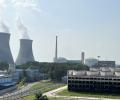
Atomic Energy Commission Chairman Ajit Kumar Mohanty announced that India's private sector is projected to invest Rs 7.5 lakh crore and contribute 30 GW towards the nation's goal of achieving 100 GW nuclear power capacity by 2047. This marks a significant policy shift, facilitated by the SHANTI Act, encouraging private participation in nuclear energy beyond the traditional public sector model. The country is also exploring Small Modular Reactors (SMRs) for industrial needs and advancing its three-stage nuclear power programme, leveraging its substantial thorium reserves.
Indian benchmark indices Sensex and Nifty experienced declines in early trade, ending a two-day rally, driven by a spike in Brent crude oil prices above USD 101 per barrel and investor caution ahead of the Reserve Bank of India's monetary policy decision. Track Sensex, Nifty on October 7.
Senior BJP leader Arun Shourie on Monday accused the United Progressive Alliance government of "outsourcing" the country's foreign policy to the United States in the wake of industrialised nations (G-8) putting curbs on full nuclear cooperation with countries like India.

India-US ties may be strained, but abandoning the relationship is not the answer; India must deal with Washington firmly without becoming either servile or hostile, asserts Ambassador T P Sreenivasan.

The successful hosting of the 18th BRICS summit in New Delhi has provided a significant boost to the BJP, offering a timely opportunity to strengthen its narrative against the opposition ahead of crucial assembly elections next year. BJP sources highlight the BRICS grouping's strong condemnation of the Pahalgam terror attack and the consensus declaration as major diplomatic victories for the Modi government, countering criticisms of its foreign policy. The party plans to leverage these outcomes during its month-long Seva Sankalp campaign to connect with various sections of society.
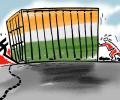
The United States and the European Union have strongly criticised India's trade policies at the World Trade Organization review, highlighting concerns over high tariffs, quality-control orders (QCOs), and restrictions on digital trade and services, which they argue undermine India's economic openness.

The Supreme Court has urged the CBSE to reconsider the implementation of its three-language policy for Class 9 students, emphasising that children should not be subjected to undue pressure. The court highlighted concerns about infrastructure, the starting point of the policy, and the definition of 'native' languages.

India's foreign exchange reserves increased by $9.9 billion to $716.9 billion for the week ended August 14, as reported by the Reserve Bank of India (RBI). This surge follows a previous jump of $14.14 billion in the week prior, indicating a robust recovery after a period of decline earlier this year.

The Swadeshi Jagran Manch (SJM) has urged the Indian government to deny permission to Elon Musk's Starlink for commercial satellite broadband services, citing national security concerns. The RSS-affiliated organisation highlighted issues with data bypassing Indian gateways and the potential for misuse by hostile actors, advocating for indigenous solutions.
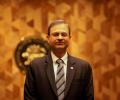
A 25-basis-point increase would restore some real monetary restraint when expected inflation has risen, liquidity remains easy and growth is strong, points out Amarendu Nandy.

US Secretary of State Marco Rubio, during his visit to Mumbai, affirmed that the US policy on weapons aid and intelligence sharing for Ukraine remains unchanged. He stated that President Donald Trump is "frustrated and angry" over false accusations of deliberately harming Ukraine and is keen on a negotiated end to the conflict. Rubio also addressed concerns about missile interceptor supplies and intelligence sharing regarding recent air strikes, attributing any issues to technical matters rather than deliberate denial. He highlighted global concerns over fuel shortages and the risk of escalation, stressing the urgent need to end the war.

India's Chief Economic Advisor V Anantha Nageswaran stated that the country's balance of payments (BoP) pressure is expected to remain a continuous challenge due to rising imports, commodity dependence, high global interest rates, and intense competition for capital.

'The Chinese military cannot advance much in Ladakh, even if they want to.' 'Similarly, in Arunachal Pradesh, they can rename a village or two, intrude here or there, but cannot do much more realistically.'

Indian benchmark stock indices, Sensex and Nifty, closed lower due to profit-taking, a spike in wholesale price-based inflation, and firm crude oil prices, despite some support from easing intraday crude oil prices and rupee appreciation.

New Delhi must look for formal, institutional statements issued directly from Washington rather than rely on casual pronouncements meant for local audiences, notes Ambassador Rajasekhar.

External Affairs Minister S Jaishankar raised India's concerns with US Secretary of State Marco Rubio regarding changes to US visa and immigration policies, emphasising that legal mobility should not be negatively affected. Rubio acknowledged potential 'bumps' during the transition as the US aims to improve its immigration system.
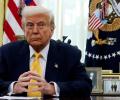
US President Donald Trump is set to engage in a series of high-profile meetings during the 81st United Nations General Assembly High-Level Week in New York, including discussions with NYC Mayor Zohran Mamdani, French President Emmanuel Macron, and Ukrainian President Volodymyr Zelenskyy.

"Pressure on the current account is a temporary problem. Sooner rather than later, our external sector will improve," said RBI Governor Sanjay Malhotra.

India is deeply concerned by the growing consolidation of Pakistan-backed jihadi and radical Islamist groups in Bangladesh, particularly in the strategically vital Chittagong Hill Tracts, which experts warn is transforming the country into a new safe haven for these networks and posing a direct threat to India's security.

Leading private banks in India, including HDFC Bank, ICICI Bank, and Axis Bank, experienced a decline in net interest margins (NIMs) during the second quarter of the financial year due to significant deposit mobilisation under the Foreign Currency Non-Resident (Bank), or FCNR (B), scheme. However, banks anticipate a recovery in margins in the coming quarters as these funds are deployed and the interest-rate cycle supports lending yields.

Indian benchmark indices, Sensex and Nifty, saw an early rebound after significant losses, driven by value buying, though elevated oil prices and anticipation of the US Federal Reserve's policy decision tempered gains. Track Sensex, Nifty on September 16.

'...but could demotivate employees seeking US residency.'
